


The World’s No.1 Superstar® argues that breaking Michael Jackson’s records is worth celebrating — but using the late King of Pop as a continuing measure of an artist’s relevance misses the point of building an original career.
FOR IMMEDIATE RELEASE
NEW YORK, LOS ANGELES and LONDON
In an entertainment business increasingly driven by streaming totals, chart records, social-media reach and blockbuster touring numbers, Global Pop Icon Sidow Sobrino is challenging one of pop culture’s most persistent competitive narratives: the continuing attempt to measure contemporary stars against Michael Jackson.
With Michael Jackson’s life and career returning to the cultural spotlight through the upcoming biographical film Michael, Sobrino says the renewed attention presents an opportunity to consider what today’s entertainers should actually take from the King of Pop’s legacy.
Throughout Sobrino's career, he has cultivated a voice that extends beyond his own releases — offering perspectives on entertainment, creativity and popular culture while building an identity unmistakably his own. The star celebrates record-breaking achievements while questioning the need to measure individual greatness against someone else's legacy.
“Wanting to surpass Michael Jackson in popularity long after his passing proves that an artist or marketing team possesses little to no originality. Break records. Set new ones. Sell out stadiums. Top the charts. But build your own lane. Michael Jackson already built his.” — Sidow Sobrino
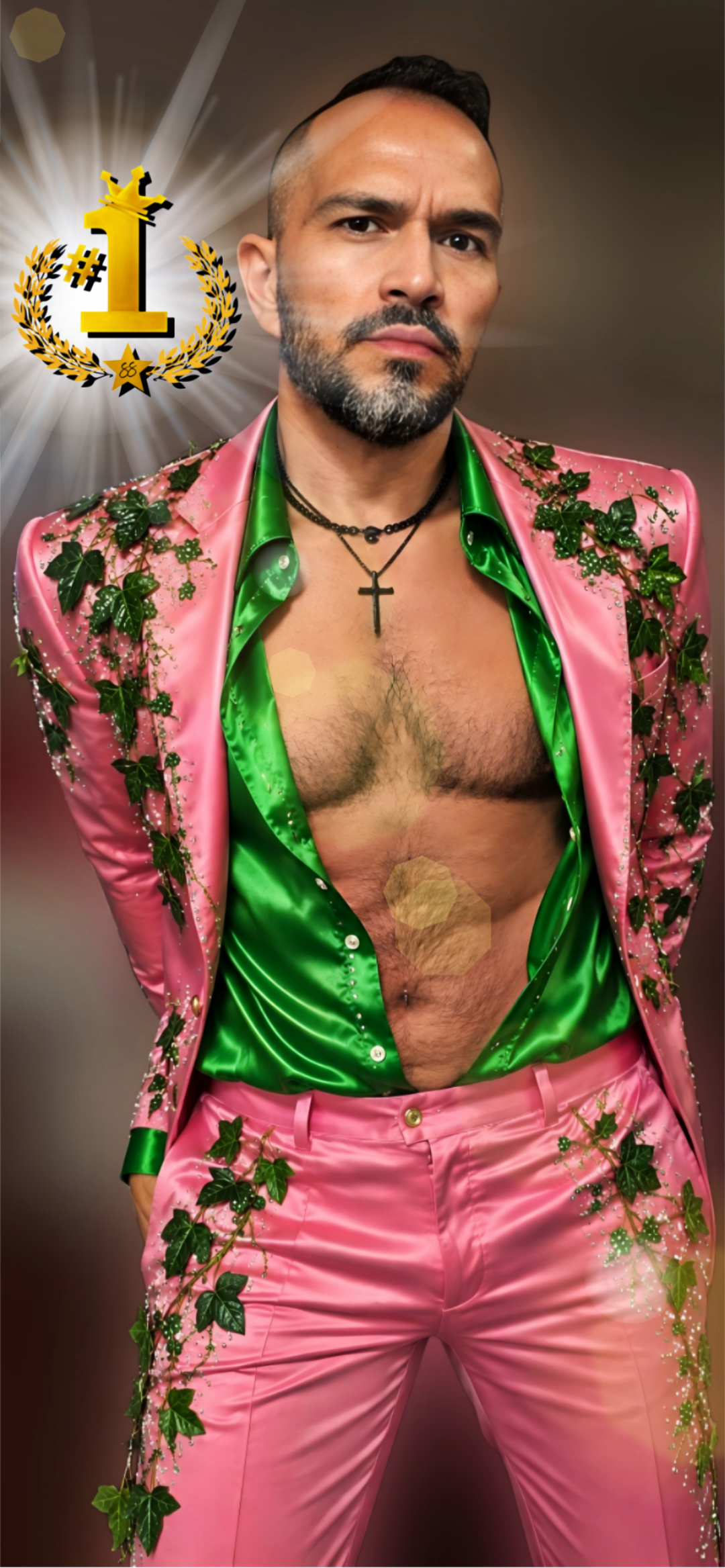
For the Under Your Spell singer-songwriter, there is a fundamental difference between breaking a record and surpassing the cultural phenomenon of the artist who set it.
Jackson died in 2009. He is no longer recording new studio albums, mounting tours, promoting singles or competing for the attention of new generations. Yet his name continues to surface whenever contemporary artists reach major commercial milestones.
The irony, Sobrino argues, is difficult to ignore: the more the industry uses Michael Jackson to establish that another artist has surpassed him, the more it reinforces Jackson as the benchmark.
“Breaking somebody’s record is an achievement,” Sobrino says. “Celebrate it. You earned it. But saying that a number means you have replaced what that person represented is something entirely different. We are working in a different industry, entertaining different generations, with different technology, different distribution and different ways of measuring success.”
The historical numbers help explain why Jackson remains such an enduring reference point.
Guinness World Records recognizes Jackson’s 1982 Thriller as the world’s best-selling album, estimating global sales in excess of 67 million copies. The album also produced seven U.S. Top 10 singles.
Jackson became the first artist to win eight GRAMMY® Awards in a single night in 1984. His subsequent album Bad produced five No. 1 singles, then a first for a single album.
But Jackson’s position in entertainment history was built on more than numbers.
The Rock & Roll Hall of Fame credits him with redefining the sound and look of pop worldwide and setting new standards for live performance. The Recording Academy has similarly described the nearly 14-minute Thriller short film as a watershed moment that demonstrated the possibilities of merging filmmaking and music.
That distinction — between accumulating numbers and creating an identifiable artistic language — sits at the center of Sobrino’s argument.
Michael Jackson himself drew inspiration from performers and traditions that came before him. But the resulting combination of music, movement, fashion, filmmaking and showmanship became unmistakably his own.
Sobrino believes that should be the lesson for the artists who follow.
Take inspiration from greatness. Don’t inherit somebody else’s competition.

“Create your own style,” Sobrino says. “Work toward your own achievements, awards, presence, image and performance. Give the public something that belongs to you. If Michael Jackson is still the measuring stick, his legacy is still setting the standard.”
It is a philosophy Sobrino has applied to his own entertainment career.
Rather than position himself as the successor to an established entertainer, the singer-songwriter, actor and producer has built his public identity around The World’s No.1 Superstar®, developing his own music, imagery, characters, cinematic worlds and visual presentation around that identity.
For Sobrino, Michael Jackson serves not as a throne waiting for another entertainer to occupy it, but as evidence of what can happen when an artist develops an identity powerful enough to become inseparable from the work.
That also makes comparisons across generations increasingly complicated. The mechanics of the music business have changed dramatically: physical purchases coexist with streaming, social platforms provide direct global distribution, chart methodologies have evolved, and today’s artists can reach audiences through channels that did not exist during much of Jackson’s career.
The playing field has changed. The participants have changed. And one of the people supposedly participating in the competition is no longer here to compete.
So why continue running the race?
Sobrino’s answer is simple: don’t. Start another one.
“Michael Jackson already showed the world what Michael Jackson could become,” Sobrino says. “That story has been written. The challenge for every artist alive today is to find out what only they can become.”
Breaking records will always be part of entertainment. So will competition. But Sobrino argues that the greater accomplishment is reaching the point where future generations no longer need another artist’s name to explain yours.
“Michael Jackson’s legacy should be celebrated, not treated as a finish line.”